
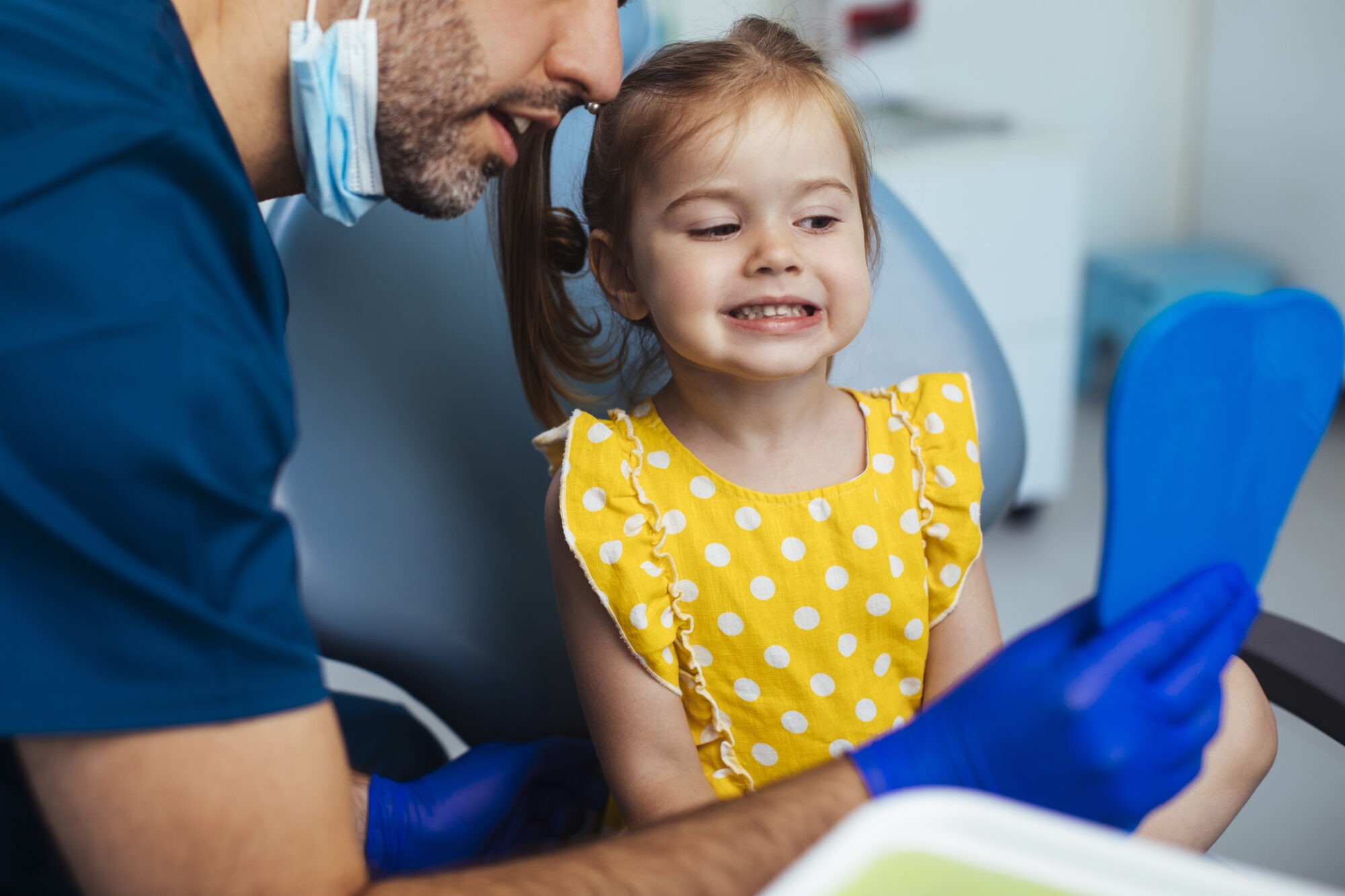
When should a baby go to the dentist? It’s one of the most common questions new parents ask, and the answer surprises many families: your baby’s first dental visit should happen by their first birthday, or within six months of the first tooth coming in, whichever comes first. That’s the recommendation from the American Academy of Pediatric Dentistry, and it’s echoed by pediatricians and the American Dental Association.
If that sounds early, you’re not alone. Below, our pediatric dental team explains why the age-one visit matters, what actually happens during it, and how to make it easy on you and your little one.
Why the First Birthday Is the Right Time
Baby teeth may be temporary, but they do important work. They help your child chew, form words, and hold space for the permanent teeth growing underneath. Tooth decay can begin as soon as the first tooth breaks through the gums, and early childhood cavities are among the most common chronic conditions in young kids.
Seeing a pediatric dentist around age one isn’t about finding problems. It’s about preventing them. At this age, a visit is mostly coaching for parents, plus a quick, gentle look at your baby’s mouth. It also starts what dentists call a “dental home”: one trusted place that knows your child’s history and can answer questions as they grow.
Signs Your Baby Should Be Seen Sooner
Most babies can wait until the first-birthday visit, but call a pediatric dentist sooner if you notice:
- White or brown spots on the teeth, especially near the gumline
- Trouble latching or feeding that might point to a tongue or lip tie
- Swollen, bleeding, or unusually red gums
- A tooth that was chipped or injured in a fall
- Teeth that came in very early, or none by around 15 to 18 months
What Happens at a Baby’s First Dental Visit
A first visit is short, usually well under an hour, and very gentle. At Cobblestone Kids, our infant dental exam typically includes:
- A knee-to-knee exam. You sit facing the dentist with your baby lying back across both laps, so your child can see you the whole time.
- A look at teeth, gums, and jaw. We check how teeth are coming in, look for early signs of decay, and note how the bite and jaw are developing.
- A gentle cleaning, if teeth are present. Often just a soft brush or gauze, sometimes with fluoride varnish.
- Parent coaching. Brushing technique, how much toothpaste to use, bottle and sippy-cup habits, pacifiers, thumb-sucking, and teething relief.
Crying is completely normal at this age and doesn’t mean the visit went badly. Babies cry at lots of new things. The exam still gives us the information we need.
How to Prepare for the Visit
A little planning goes a long way:
- Book a morning appointment or a time that avoids nap time.
- Bring a list of questions. Parents often ask about teething, fluoride, and nighttime feeding.
- Pack a favorite toy or blanket for comfort.
- Complete new patient forms online ahead of time so you can focus on your baby.
For older toddlers, our guide to your child’s first pediatric dentist visit covers what to expect as kids get older and more aware.
Caring for Your Baby’s Teeth at Home
Good habits start before the first tooth. Wipe your baby’s gums with a clean, damp cloth after feedings. Once teeth appear, brush twice a day with a soft infant toothbrush and a smear of fluoride toothpaste about the size of a grain of rice. Avoid putting your baby to bed with a bottle of milk, formula, or juice, since long exposure to sugars is a leading cause of early decay.
Schedule Your Baby’s First Checkup
So, when should a baby go to the dentist? By the first birthday, and ideally as soon as that first tooth shows up. Our pediatric dentists see babies at our Philadelphia, Cherry Hill, and Glen Mills offices, and we make that first visit calm, quick, and genuinely helpful for parents.